
ReproducibiliTea in 2026
The ReproducibiliTea Steering Community is expanding and changing yet again to make sure that we keep the early career researcher (ECR) perspective to building open research communities as well as allowing for more diverse perspectives. This year, we are welcoming 4 new committee members who will bring fresh impulses to our work.
Please join us in welcoming our new committee members:
Ze Freeman @zefreeman.bsky.social
Ze is finishing his PhD at the Institute of Psychiatry, Psychology & Neuroscience, King’s College London. In 2024, he started the university’s ReproducibiliTea club, which he co-organises. He has collaborated on open research projects at King’s, in the UKRN, and with other groups to improve transparency and credibility in research.

Ezgi Hatip Ünlü (LinkedIn)
Ezgi is a first-year PhD candidate in Clinical Epidemiology in Cardiology at Erasmus MC. She has a strong interdisciplinary background in Medicine, Anesthesiology, and Biostatistics. She began a Master’s program in Clinical Epidemiology at Erasmus MC in 2023 and now continues directly as a PhD candidate. In her PhD project, she focuses on prognostic biomarkers in heart failure, with a particular interest in improving reproducibility in clinical research.

Quentin Le Cornu @quentinlc.bsky.social / (LinkedIn)
Quentin Le Cornu is a part-time PhD student working on a research project focused on developing evidence-based data management and sharing plans for randomised controlled trials and meta-analyses in clinical research. This project is a collaboration between University College Dublin (UCD), the University of Rennes (France), and the University of Ottawa (Canada). Since 2025, Quentin has co-organised the ReproducibiliTea journal club at UCD. He is also a research statistician and trainer at UCD CSTAR (Centre for Support and Training in Analysis and Research). Previously, he held positions at Inserm U1153 and the Clinical Investigation Center (CIC 1414) in France. His main research interests include open science and clinical trial methodology.

Marjan Monshi
Marjan is a PhD candidate in Physics at Kaunas University of Technology (KTU), in collaboration with the European PCAM network at Southern Denmark University. She is one of the core members of the Open Science community at KTU and registered the first university’s ReproducibiliTea journal club specifically for the engineering faculty. Inspired by the shift towards democratic and reproducible research, she values trust and transparency and is committed to fostering a collaborative culture of knowledge sharing among early-career researchers.
And, our new committee chair:
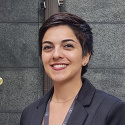
Lianne Wolsink (LinkedIn)
Lianne is currently finishing her PhD at the Department of Cognitive Psychology at Ruhr University Bochum (Germany). She is originally from the Netherlands, where she studied Psychology and Neuroscience in Nijmegen and Maastricht. Over the past years, she has developed a strong interest in issues surrounding reproducibility and transparency. Lianne started and co-organised the ReproducibiliTea in Bochum. She believes that ReproducibiliTea journal clubs are ideal places for early career researchers to learn, discuss, reflect, and connect, not only locally, but also with the global community and other reform initiatives.

And, give a warm ‘welcome back’ to our returning members:
Abigail Licata @licataae.bsky.social / (LinkedIn)
Abigail is a PhD student in Neuroscience at the University of Geneva (Switzerland) and is a part of the Swiss Reproducibility Network. She has co-organized the ReproducibiliTea journal clubs since 2023 and has been involved with reproducibility-focused events including BrainHack and workshops on reproducible analysis with R Quarto. Prior to her PhD, she worked in clinics in the US and Germany, assisting professionals of different backgrounds with neuroimaging analysis in various patient populations. Beyond her passion for reproducible neuroimaging, she also helps connect women in neuroscience across the globe as a member and event co-organizer for the Women in Neuroscience Repository. She believes in science as a collaborative effort for the benefit of humanity and hopes to spread FAIR neuroimaging methods far and wide!

Anastasiia Marmyleva @marmyleva_ana / @marmyleva-ana.bsky.social / (LinkedIn)
Anastasiia is an avid mitochondria enthusiast, which drove her to pursue a Doctoral degree at the University of Helsinki, Finland. She is also a co-organiser of a ReproducibiliTea UniHelsinki club - a safe space for researchers to address the issues of reproducibility in science and educate each other on good practices. Anastasiia is also passionate about science communication and is not afraid to use these tools to fight against miscommunication in research.

Michael Muhoozi (LinkedIn)
Michael Muhoozi is a PhD student in Health Care Policy & Research at Virginia Commonwealth University and a researcher with the Center for Health and Population Research at Makerere University in Uganda. His work spans health services research, epidemiology, and economic evaluation, with a particular focus on strengthening evidence‑informed decision‑making in health policy. Motivated by the need for transparent and trustworthy research, Michael founded and co‑organizes Makerere University’s first ReproducibiliTea journal club, creating a collaborative space for early‑career researchers to engage with open science principles. He is also part of the African Reproducibility Network (AREN), where he contributes to capacity‑building efforts that promote rigorous, reproducible, and accessible research practices. His research interests include reproducible workflows, open science, and equitable policy evaluation, particularly within underrepresented and resource‑constrained settings. Michael is committed to fostering a culture of methodological integrity and shared learning, ensuring that robust evidence can genuinely inform public health action.
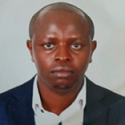
Hemani Sharma (LinkedIn)
Hemani is a dedicated professional in the field of Bioinformatics. She is currently pursuing Ph.D. in Bioinformatics from Jaipur National University. She is adept at crafting scientific papers for academic journals and writes the BIOCLUES newsletter, organizes the Journal Club talks, and coordinates conferences and workshops to ensure productive outcomes, fostering collaborative scientific discussions. Hemani also worked as a Junior Research Fellow at the Indian Institute of Wheat and Barley (2011-2013) under the guidance of Dr. Ravish Chatrath and Dr. Rekha Malik. Noteworthy research projects include hierarchical clustering of Indian wheat varieties, evaluation of agro-morphological characters for genetic diversity, and establishing a core set of Indian wheat.
Plans for 2026
We have a lot of exciting projects and we are always looking for ideas. If you want to get involved, have a cool idea you think we could tackle, or have comments for us, please get in touch.